

Enhancing cognitive capacity through modulating the brain’s natural rhythms is a rapidly advancing domain in human neuroscience. Recent studies point to electrophysiological factors—especially neuronal oscillations, spike timing-dependent plasticity (STDP), and carefully controlled feedback training—as key drivers of higher-order cognition.
Electrophysiological Drivers of Bio-Intelligence
The brain’s electrical signals, or oscillations, include gamma waves (30–100 Hz), which are critical for attention, perception, and memory binding, and theta waves (3–8 Hz), which serve as a temporal scaffold for learning. Research suggests that agile minds leverage these frequencies with more precise and efficient firing patterns, a concept aligned with the neural efficiency hypothesis. The neural efficiency hypothesis posits that individuals with higher cognitive performance use fewer mental resources to achieve similar or superior outcomes. By maintaining precisely timed synchronisation across different brain regions, cognitive processes can unfold with reduced neural “overhead.”
STDP and the Emergence of Rich-Club Networks
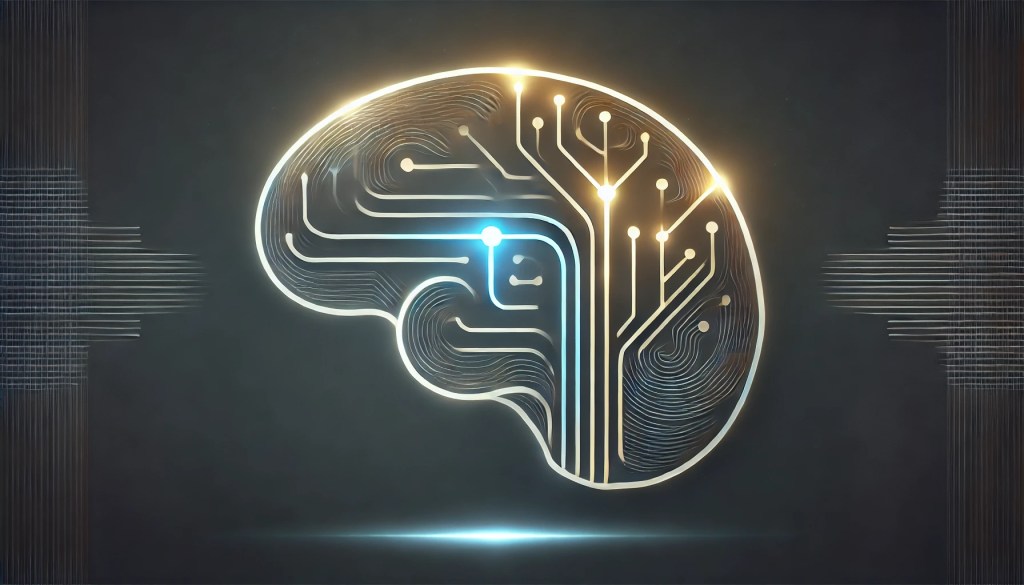
STDP refines this coordination by governing how synaptic strengths adjust when neurons fire within specific time windows. Balanced excitatory and inhibitory dynamics promote highly interconnected “rich-club” networks, which facilitate seamless information flow. The term “rich-club,” originating in network science, describes a group of highly connected hubs that also interconnect among themselves, boosting communication efficiency. Conversely, skewed inhibitory activity may limit synchronised firing and degrade cognitive performance. Understanding how these rich-club configurations form and operate has profound implications for enhancing cognition at the network level.
Neurofeedback: A Path to Self-Guided Cognitive Enhancement
Neurofeedback studies have demonstrated that training individuals to increase gamma-band activity can yield measurable benefits in tasks requiring rapid feature integration. This indicates a path toward non-invasive, self-guided approaches for improving specific facets of intelligence. When combined with adaptive interventions such as transcranial electrical or magnetic stimulation, targeted neuromodulation may further optimise oscillatory states.
Implantables for Advanced Modulation

Practical applications of these insights increasingly focus on implantables that interact directly with the central nervous system. Biological implants, such as those in development by Neurogen, are engineered to repair and restore neurons lost due to neurodegenerative conditions. In the near future, these biological implants may have the capacity to modulate electrophysiological signals with greater precision than external methods. Systems integrated with silicon-based components alongside biological implants could deliver even higher processing efficiency and broader functional scope. These advancements address the balance between excitatory and inhibitory neural activity, leveraging stimulation-based or biologically derived interventions to reinforce optimal network dynamics and enhance Bio-intelligent performance.
Toward a Technology-Driven Approach
Although similar principles may inform advanced computing systems, the primary focus remains on leveraging electrophysiological mechanisms to enhance human biological superintelligence directly. By identifying optimal oscillatory patterns and dynamically reshaping synaptic connections, it is possible to move beyond conventional cognitive constraints. This technology- and innovation-driven approach holds promise for elevating learning capacity, creativity, and problem-solving capabilities.
The Future of Biological Superintelligence
Ongoing investigations continue to refine these methods, informing next-generation techniques that blend neurofeedback, precision stimulation, and network-level insights. In doing so, the pursuit of biological superintelligence intensifies, driving the evolution of neural engineering and opening new scope of human potential.
Join the Conversation
If these frontiers of neural engineering and cognitive enhancement spark your curiosity, we invite you to share your thoughts, experiences, and questions. Collaborate with fellow enthusiasts, researchers, and professionals driving this transformative journey toward elevated intelligence and expanded human capability.
Further Reading
Axmacher, N., Mormann, F., Fernández, G., Elger, C. E., & Fell, J. (2006). Memory formation by neuronal synchronization. Brain Res Rev, 52(1), 170-182. https://doi.org/10.1016/j.brainresrev.2006.01.007
Borges, R. R., Borges, F. S., Lameu, E. L., Protachevicz, P. R., Iarosz, K. C., Caldas, I. L., Viana, R. L., Macau, E. E. N., Baptista, M. S., Grebogi, C., & Batista, A. M. (2017). Synaptic Plasticity and Spike Synchronisation in Neuronal Networks. Brazilian Journal of Physics, 47(6), 678-688. https://doi.org/10.1007/s13538-017-0529-5
Keizer, A. W., Verschoor, M., Verment, R. S., & Hommel, B. (2010). The effect of gamma enhancing neurofeedback on the control of feature bindings and intelligence measures. Int J Psychophysiol, 75(1), 25-32. https://doi.org/10.1016/j.ijpsycho.2009.10.011
 Nova-Intelligence
Leave a comment