NOva-intelligence

Reaching The Dawn of Human 2.0

  • Enhancing cognitive capacity through modulating the brain’s natural rhythms is a rapidly advancing domain in human neuroscience. Recent studies point to electrophysiological factors—especially neuronal oscillations, spike timing-dependent plasticity (STDP), and carefully controlled feedback training—as key drivers of higher-order cognition.

    Electrophysiological Drivers of Bio-Intelligence

    The brain’s electrical signals, or oscillations, include gamma waves (30–100 Hz), which are critical for attention, perception, and memory binding, and theta waves (3–8 Hz), which serve as a temporal scaffold for learning. Research suggests that agile minds leverage these frequencies with more precise and efficient firing patterns, a concept aligned with the neural efficiency hypothesis. The neural efficiency hypothesis posits that individuals with higher cognitive performance use fewer mental resources to achieve similar or superior outcomes. By maintaining precisely timed synchronisation across different brain regions, cognitive processes can unfold with reduced neural “overhead.”

    STDP and the Emergence of Rich-Club Networks
    STDP refines this coordination by governing how synaptic strengths adjust when neurons fire within specific time windows. Balanced excitatory and inhibitory dynamics promote highly interconnected “rich-club” networks, which facilitate seamless information flow. The term “rich-club,” originating in network science, describes a group of highly connected hubs that also interconnect among themselves, boosting communication efficiency. Conversely, skewed inhibitory activity may limit synchronised firing and degrade cognitive performance. Understanding how these rich-club configurations form and operate has profound implications for enhancing cognition at the network level.

    Neurofeedback: A Path to Self-Guided Cognitive Enhancement

    Neurofeedback studies have demonstrated that training individuals to increase gamma-band activity can yield measurable benefits in tasks requiring rapid feature integration. This indicates a path toward non-invasive, self-guided approaches for improving specific facets of intelligence. When combined with adaptive interventions such as transcranial electrical or magnetic stimulation, targeted neuromodulation may further optimise oscillatory states.

    Implantables for Advanced Modulation

    Practical applications of these insights increasingly focus on implantables that interact directly with the central nervous system. Biological implants, such as those in development by Neurogen, are engineered to repair and restore neurons lost due to neurodegenerative conditions. In the near future, these biological implants may have the capacity to modulate electrophysiological signals with greater precision than external methods. Systems integrated with silicon-based components alongside biological implants could deliver even higher processing efficiency and broader functional scope. These advancements address the balance between excitatory and inhibitory neural activity, leveraging stimulation-based or biologically derived interventions to reinforce optimal network dynamics and enhance Bio-intelligent performance.

    Toward a Technology-Driven Approach

    Although similar principles may inform advanced computing systems, the primary focus remains on leveraging electrophysiological mechanisms to enhance human biological superintelligence directly. By identifying optimal oscillatory patterns and dynamically reshaping synaptic connections, it is possible to move beyond conventional cognitive constraints. This technology- and innovation-driven approach holds promise for elevating learning capacity, creativity, and problem-solving capabilities.

    The Future of Biological Superintelligence

    Ongoing investigations continue to refine these methods, informing next-generation techniques that blend neurofeedback, precision stimulation, and network-level insights. In doing so, the pursuit of biological superintelligence intensifies, driving the evolution of neural engineering and opening new scope of human potential.

    Join the Conversation

    If these frontiers of neural engineering and cognitive enhancement spark your curiosity, we invite you to share your thoughts, experiences, and questions. Collaborate with fellow enthusiasts, researchers, and professionals driving this transformative journey toward elevated intelligence and expanded human capability.

    Further Reading

    Axmacher, N., Mormann, F., Fernández, G., Elger, C. E., & Fell, J. (2006). Memory formation by neuronal synchronization. Brain Res Rev, 52(1), 170-182. https://doi.org/10.1016/j.brainresrev.2006.01.007

    Borges, R. R., Borges, F. S., Lameu, E. L., Protachevicz, P. R., Iarosz, K. C., Caldas, I. L., Viana, R. L., Macau, E. E. N., Baptista, M. S., Grebogi, C., & Batista, A. M. (2017). Synaptic Plasticity and Spike Synchronisation in Neuronal Networks. Brazilian Journal of Physics, 47(6), 678-688. https://doi.org/10.1007/s13538-017-0529-5

    Keizer, A. W., Verschoor, M., Verment, R. S., & Hommel, B. (2010). The effect of gamma enhancing neurofeedback on the control of feature bindings and intelligence measures. Int J Psychophysiol, 75(1), 25-32. https://doi.org/10.1016/j.ijpsycho.2009.10.011
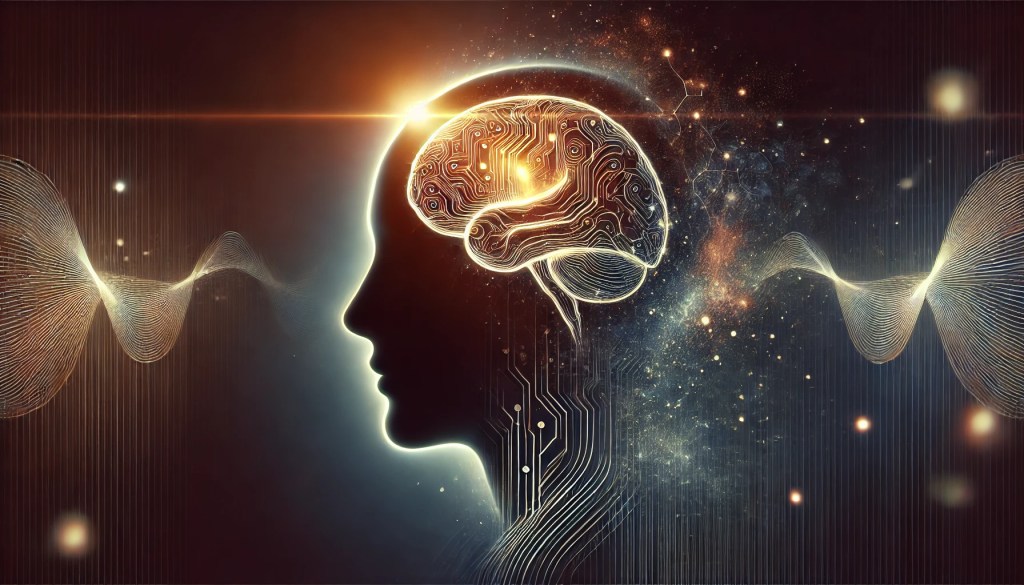
  • The idea of superintelligence often conjures images of science fiction—hyper-advanced beings who effortlessly surpass our own cognitive reach. Yet, as we continue to unravel the intricacies of human biology, what once seemed speculative begins to take on a shape that feels startlingly real. The journey toward superintelligence, it appears, starts right at home: inside our very own brains.

    The Architecture of Biological Intelligence

    At the heart of human intelligence is the neocortex, a region with remarkably organised layers and columns of nerve cells. In this complex arrangement lie the foundations for how we perceive sensory input, encode memories, and retrieve information when called upon. The notion of cortical columns, championed by ideas like Jeff Hawkins’ Thousand Brain Theory, highlights how our brains use reference frames—largely involving space and grid cells—to contextualise and interpret the world around us.

    But the neocortex doesn’t act in isolation. Intelligence emerges from a collaboration across multiple brain regions—associative cortices, the hippocampus, higher-order sensory and motor areas, and the prefrontal cortex—each specialising in processing distinct facets of our experiences. Much like an orchestra that relies on each instrument to create a grand symphony, intelligence demands a fully integrated cerebral network.

    Forces Shaping human Cognitive Abilities

    Biological intelligence (BI) is influenced by an interplay of structural and genetic factors. For instance, the diversity of neuron types and the density of synaptic connections determine how effectively signals travel and interact within the brain. Similarly, dendritic arborisation—the branching of neurons—enables sophisticated networks of communication.

    Yet, it’s not only about physical connections. Electrophysiological processes such as synchronized gamma oscillations and feedback loops between the neocortex and hippocampus highlight the brain’s astonishing capacity for rapid information exchange. When synchronized correctly, neurons amplify signals and streamline complex cognitive tasks in real time.

    On the genetic front, specific genes like FOXG1 have been linked to synaptic density and network organisation, especially at the early brain development stage, directly affecting human cognitive reach.

    Emerging fields within genetic modulation may hint at the possibility of enhancing natural intelligence through carefully targeted interventions. Each new gene or transcript identified offers a deeper look at how we might one day augment and refine human intellect at its most fundamental levels.

    The Challenges of Replicating the Brain

    Replicating human intelligence in the laboratory can be daunting, both intellectually and experimentally. Despite a comprehensive understanding of key structures and processes, attempts to recreate the intricate circuits of the neocortex have yet to yield consistent, fully functional results. True superintelligence goes beyond merely copying neural connections; it requires the interplay of countless variables—cell types, synapses, electrical rhythms, and genetics—all working in harmony.

    For researchers tackling diseases like Alzheimer’s or Parkinson’s, this challenge is more than theoretical. Tissue and cell replacement therapies aim to restore lost function, yet without a robust model of how biological intelligence truly operates, these interventions remain exploratory. Achieving reproducible, high-level cognitive outcomes in a lab-grown structure is still a frontier.

    The Path Forward: Merging Biology and Technology

    While fully replicating the brain in silicone may remain elusive for now, the horizon for human superintelligence might lie in the fusion of biological and artificial systems. Implantable biologically engineered tissues, in tandem with sophisticated brain-computer interfaces, could create a paradigm where intelligence is augmented rather than replaced.

    By harnessing the strengths of both natural and artificial networks, we may move beyond traditional AI models that excel in pattern recognition but lack the nuances of human insight. This hybrid approach, with biological implants complementing silicone-based processors, may hold promises for a world where AI not only processes data but also learns context, abstracts meaning, and adapts organically—all hallmarks of genuine intelligence.

    From Fiction to Tangible Reality

    Humanity stands on the cusp of transforming age-old sci-fi tropes into actionable science. As we gain a deeper understanding of the human genome and transcriptome, map out the most critical synaptic connections, and refine the art of neural engineering, the gap between fiction and reality narrows. The dawn of Human 2.0 may well be the era in which our biological heritage meets cutting-edge technology, creating a form of intelligence that transcends conventional boundaries.

    In the coming years, the questions we must answer are not just about how to make technology smarter but how to evolve the human Biological Intelligence in ways that ensure ethics, safety, and shared benefit. After all, the pursuit of superintelligence isn’t simply about bigger, faster brains—it’s about embracing the full potential of humanity’s greatest asset: our capacity to learn, adapt, and empathise.

    Fiction has always inspired reality. Today, what once seemed like an imaginative leap is fast becoming a beacon, guiding researchers, innovators, and dreamers toward a future where human superintelligence truly flourishes.

    – – – – – – – – – – – – – – – – – – – – – – – – – – – – – – – – – – – – – –

    As humanity stands on the threshold of redefining what it means to be intelligent, each of us holds a stake in this unfolding story. Advancements in biology and technology are racing ahead, and responsible collaboration is our greatest asset. Join the conversation, share your insights, and help guide the ethical and scientific breakthroughs that will shape the dawn of Human 2.0. Let’s ensure that tomorrow’s superintelligence serves and enriches all of humankind.

    +